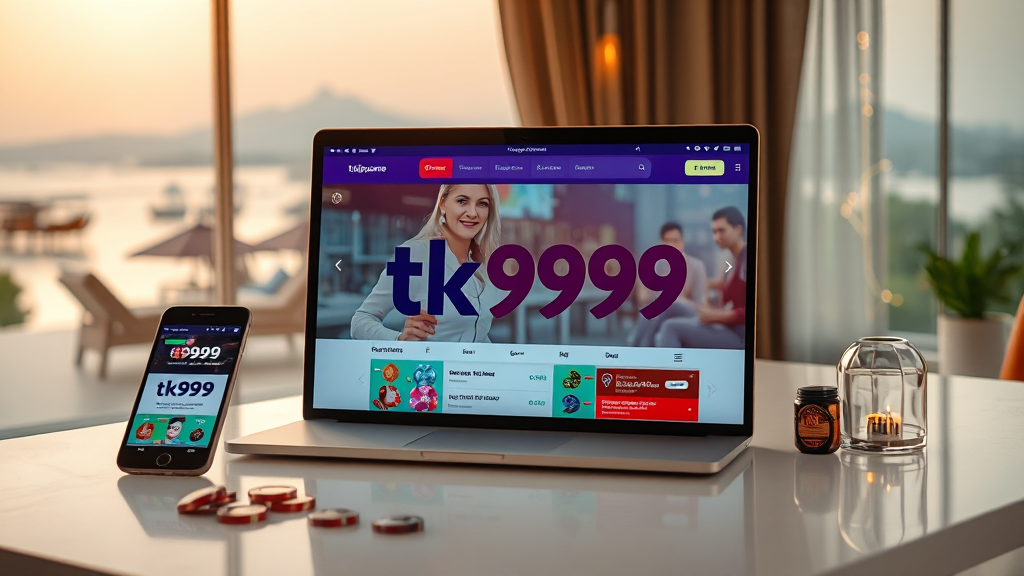
What Is on tk999: A Neutral Survey of Activity Categories
This article is a survey, not a recommendation. It exists to answer a simple, practical question that many curious readers ask before they decide whether a platform is worth their time: what kinds of activities are actually available on tk999? Nothing written here promises any outcome, guarantees any result, or suggests that any particular activity will suit any particular person. Think of it as a catalogue of categories, described in plain terms, so you can form your own view about whether anything on the platform matches your interests.
The platform describes itself as an online betting and gaming destination aimed primarily at users in Bangladesh, with registration and a downloadable app forming the core of the experience. That framing matters for this survey because it shapes what the activity categories look like: mobile-first, account-based, and organised around markets and games rather than around physical venues. What follows is a neutral walkthrough of the main categories you are likely to encounter, with a note on each about the kind of user who tends to gravitate toward it. No category is ranked, and no category is endorsed.
Sports Markets and Pre-Match Betting
The first broad category is sports markets. In a platform of this type, sports markets typically consist of a list of upcoming fixtures across popular sports, with a set of possible outcomes attached to each fixture. A user reviews the list, picks an outcome they believe is more likely than the listed terms suggest, and places a stake. The appeal is analytical rather than purely recreational: people who follow cricket, football, or other sports closely often enjoy testing their read of a match against the market’s read of the same match.
Pre-match markets are the most accessible entry point because they allow time for research. A user can look at recent form, team news, and head-to-head records before committing to anything. This tends to suit methodical users who prefer to think slowly and decide once, rather than reacting in the moment. It also suits people whose interest in the sport predates their interest in the platform — they were already following the fixtures, and the market is simply an additional layer on top of an existing habit.
It is worth being clear about what this category is not. It is not a shortcut to income, and no amount of research removes the inherent uncertainty of a sporting event. The survey here is descriptive: this category exists, it involves predicting outcomes, and it appeals to people who enjoy that kind of prediction. Whether it appeals to you is a separate question entirely.
In-Play and Live Markets
A second category covers in-play or live markets, where the terms shift as an event unfolds. Instead of deciding before the first ball or the first whistle, a user watches the event and reacts to how it develops. This is a fundamentally different rhythm from pre-match activity. Decisions happen in seconds rather than hours, and the information available changes continuously.
The kind of user drawn to live markets tends to be someone who enjoys fast feedback and is comfortable making quick judgements under pressure. They often describe the experience as more engaging than pre-match activity because the event itself becomes the centre of attention rather than a background detail. Others find the same speed stressful and prefer the slower tempo of planning ahead. Neither preference is wrong; they are simply different temperaments.
Because live markets move quickly, they demand more sustained attention. A user who cannot watch the event in real time will generally find this category less useful than the pre-match equivalent. This is a practical observation about fit, not a judgement about value.
Casino-Style Games and Their Formats
The third category is casino-style games. On a digital platform, these are typically presented as on-screen games with their own rules, visual themes, and pacing. Some are card-based, some are wheel-based, and some are built around simple matching or spinning mechanics. The common thread is that outcomes are determined by chance mechanisms built into the game, and the user’s role is to choose a game, set a stake, and play.
This category tends to attract users who want variety and quick sessions rather than long analytical engagement. Someone with fifteen minutes to spare may prefer a fast, self-contained game to a ninety-minute sporting fixture. The visual and thematic variety is part of the appeal: different games offer different moods, from minimalist card layouts to elaborate animated scenes.
It is important to describe this category honestly. Casino-style games are built around randomness, and no strategy changes the underlying mathematics of a chance-based game. Users who enjoy them generally do so for the entertainment and the variety, not because they expect a reliable return. The survey here simply notes that the category exists and that it appeals to a different temperament than sports markets do.
Account Registration and Getting Started
Before any of the above categories becomes accessible, a user typically needs an account. Registration on a platform like tk999 is generally a short process: providing basic details, confirming the account, and then accessing the activity areas. The friction here is deliberately low because the platform is mobile-first, and the expectation is that a new user will move from curiosity to a working account in a matter of minutes.
The kind of user who values a smooth registration process is, unsurprisingly, almost everyone. But it is worth noting that a quick sign-up is not the same as a considered decision. A neutral survey should flag this: the ease of creating an account should not be confused with a reason to use it. Registration is a technical step, not an endorsement of any activity category behind it.
Account holders also typically gain access to a personal area where they can view their activity history, manage preferences, and handle deposits and withdrawals. These housekeeping features are not glamorous, but they shape the day-to-day experience considerably. A platform with clear account tools tends to feel more manageable than one where basic information is hard to find.
The Mobile App and On-the-Go Access
A downloadable app is central to how platforms in this space operate, and tk999 is no exception. The app concentrates the categories described above into a single interface designed for a phone screen: sports markets, live markets, and casino-style games all sit within the same navigation structure. For users in Bangladesh, where mobile access is often the primary way people go online, this is less a convenience than a baseline expectation.
The app format suits users who want to check in briefly and frequently rather than sit down for a long session. A commuter might glance at a fixture list; someone waiting for an appointment might play a short game. This pattern of use is different from desktop-based sessions, and it shapes which categories feel most natural. Fast, self-contained activities generally translate better to a phone than long, research-heavy ones.
As with registration, the existence of an app is a factual detail rather than a recommendation. A well-built app makes a platform easier to use; it does not change the nature of the activities inside it.
Payments, Deposits, and Withdrawals
Money movement is the connective tissue between all the categories above. Deposits fund activity, and withdrawals return any balance a user chooses to take out. On platforms serving Bangladesh, local payment methods are usually supported alongside more general options, because the practical usefulness of a platform depends heavily on whether money can move in and out without friction.
This category tends to matter most to users who are already committed to using the platform and who want predictable, transparent handling of their funds. For a newcomer, payment options are worth checking before anything else, because a platform that is awkward to fund is awkward to use regardless of how appealing its activity categories look. Clear transaction records and visible balances are the kinds of features that make a platform feel orderly rather than opaque.
It is reasonable to treat this category as the practical foundation of the whole survey. Sports markets, live markets, and casino-style games all sit on top of it. If the payment layer does not suit you, none of the layers above it will feel comfortable either.
How to Read This Survey
Seven categories have now been described: pre-match sports markets, in-play markets, casino-style games, registration and accounts, the mobile app, and payments, with the platform’s overall positioning as the frame around them. Each was described in terms of what it involves and who tends to prefer it, without ranking and without promotion. That is the whole point of a neutral survey: it gives you the shape of the thing so you can decide for yourself whether any part of it is interesting.
A few closing observations are worth stating plainly. First, none of these categories guarantees an outcome. Sports markets depend on unpredictable events; casino-style games depend on chance mechanisms; neither can be made reliable through effort or skill alone. Second, the categories are not equally suited to every person. A user who enjoys slow analysis will likely find pre-match markets more natural than live ones, and a user who wants quick entertainment will likely prefer the reverse. Third, the practical layers — registration, app, payments — matter more than they first appear, because they determine whether the rest of the platform is usable at all.
If you take one thing from this survey, let it be the framing from the opening: this is a catalogue, not a recommendation. The categories on tk999 are now described in enough detail for you to judge your own interest. Whether that interest exists, and what you do with it, remains entirely your decision.