Portugal Fishing: What Beginners Actually Ask Before Their First Cast
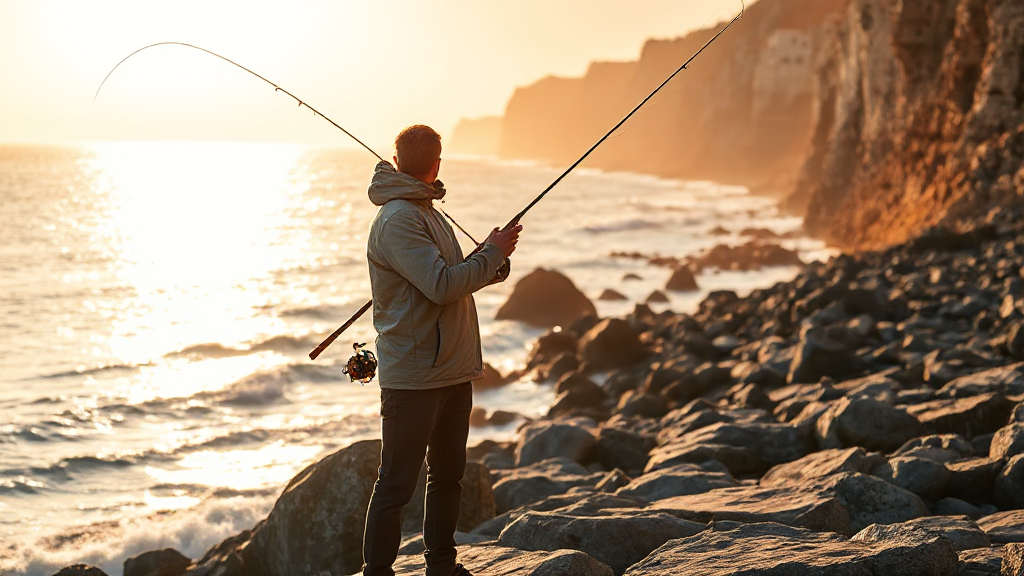
Maria stands on a rocky ledge near Cascais with a rented rod in one hand and her phone in the other. The Atlantic is throwing a steady swell against the rocks, the sun is already high, and she has exactly one question running through her head: am I even allowed to do this? She has watched people fish from this stretch of coast all week. She has seen tackle shops in town. She has read that portugal fishing is one of the great underrated saltwater experiences in Europe. But nobody told her what happens before the first cast.
That moment — rod in hand, rules unclear — is where most beginners get stuck. This is the lesson I run through with new anglers, and it always follows the same shape: one real scenario, then the variations that cover everyone else.
The First Scenario: A Tourist With a Borrowed Rod
Maria is a visitor. She is staying in a hotel, she has no Portuguese tax number, no car, and no intention of keeping anything she catches. Her situation is the most common one I see, and it is also the one that trips people up because the rules are not the same as at home.
In mainland Portugal, recreational sea fishing from the shore, from a boat, or from a kayak requires a licence issued through DGRM, the government body responsible for maritime resources. This applies to visitors as much as residents. It applies whether you are fishing from a beach, a pier, a cliff, or a boat. It applies whether you plan to release everything or take a fish home for dinner. There is no tourist exemption and no short-trip waiver.
What surprises people is how the licence is normally obtained. The standard route involves a government portal, a Portuguese tax number, and a form that is not built for someone on holiday. That is the bottleneck Maria hit. The practical alternative is a service that handles the application for you, which is exactly what fishing license applications through easyfishingpermit are designed for: a short online form, payment by card, Apple Pay, or Google Pay, and no need for a NIF or a government login.
Once that is sorted, the rest of Maria’s day is straightforward. She fishes, she enjoys it, and she does not spend her holiday worrying about a knock on the shoulder from a maritime authority officer.
Variations: How the Same Day Looks for Different Anglers
Maria’s scenario is the entry point, but the details change depending on who you are and how you fish. Here is how the same day plays out for other people.
The resident beginner. If you live in Portugal, you might assume the licence is only for tourists. It is not. A resident fishing recreationally from the shore needs the same DGRM licence. The advantage is that you can plan ahead, fish regularly, and treat the licence as part of your normal kit rather than a holiday chore. The disadvantage is that it is easy to put off — until the morning you drive to the coast and realise you cannot legally wet a line.
The boat angler. Fishing from a charter boat or a private vessel is still recreational sea fishing, and the licence requirement does not disappear because someone else is driving the boat. If you are holding the rod, you are the angler. If you are on a charter, ask the operator what they expect, but do not assume the boat’s paperwork covers you personally.
The catch-and-release purist. Some beginners believe that releasing every fish means no licence is needed. That is a misunderstanding. The licence covers the activity of fishing, not the fate of the fish. If you are casting a line into the sea with the intention of catching, you are engaged in recreational sea fishing.
The family group. If you are taking children or a partner along, each person who actually fishes needs their own licence. One adult with a rod and three kids watching is one licence. Four people taking turns with two rods is a different calculation, and it is worth sorting out before you leave the house rather than on the sand.
The multi-week visitor. If you are in Portugal for two or three weeks and plan to fish several times, the licence is not a one-day cost. It covers your activity for the period it is issued for, which makes it better value the more you use it. This is one of the reasons fishing in portugal rewards a little preparation: the setup cost is small, and the access it unlocks is large.
In every variation, the same two things matter: knowing whether you need a licence, and getting one before you fish. Everything else — rods, bait, tides, spots — is a matter of preference and local advice.
What Beginners Get Wrong About Portuguese Sea Fishing
The mistakes I see are consistent, and most of them come from assuming Portugal works like the angler’s home country.
Mistake one: assuming the rules are informal. Portugal takes its coastline seriously. The Atlantic is a working sea, and recreational fishing sits alongside commercial fishing, conservation rules, and protected areas. Enforcement exists, and officers do check. The licence is not a formality; it is the thing that separates a legal session from a fine.
Mistake two: waiting until the last minute. The most common version of this is arriving at the coast, finding a tackle shop, and asking the owner to sort out a licence. Some shops can help, some cannot, and the ones that can may not be open when you need them. Handling it online before you travel removes the entire problem.
Mistake three: confusing sea and freshwater rules. Portugal has separate frameworks for freshwater and saltwater fishing. A licence for one does not automatically cover the other. If your trip includes both a river and the coast, check each separately. Most visitors only need the sea licence, but the distinction matters if you are planning a mixed itinerary.
Mistake four: ignoring local restrictions. Even with a valid licence, there are areas where fishing is restricted or prohibited, and there are rules about minimum sizes and bag limits for certain species. These are not covered by the licence itself. They are the kind of thing you pick up from local anglers, tackle shops, or official notices at the site. The licence makes you legal; local knowledge makes you effective.
Mistake five: treating the licence as the whole story. A licence is permission, not preparation. It does not tell you where the fish are, what tide to fish, or which bait works on a given stretch of coast. Beginners who expect the paperwork to solve everything are disappointed. Beginners who treat it as the first step — the one that gets them onto the rocks legally — tend to have a much better time.
How to Prepare for a First Session on the Portuguese Coast
Once the licence question is settled, the practical side takes over. Here is the sequence I recommend to anyone fishing Portugal’s coast for the first time.
Decide where you are fishing. The Portuguese mainland coast runs from the Algarve in the south to the Minho in the north, and the character of the fishing changes dramatically along the way. The Algarve offers warmer water, accessible beaches, and a long season. The Atlantic west coast, around Lisbon, Peniche, and further north, is more exposed, more powerful, and more dependent on conditions. The type of spot you choose — sandy beach, rocky shore, harbour wall, or boat — determines your tackle, your bait, and your safety planning.
Check the conditions. The Atlantic is not a gentle sea. Swell, wind, and tide matter more here than in many places beginners are used to. A spot that looks calm in the morning can be dangerous by afternoon. Local forecasts, tide tables, and a look at the sea before you commit are all part of the routine.
Match your tackle to the environment. Shore fishing on the Portuguese coast often involves heavier weights and longer rods than beginners expect, because of current and swell. Boat fishing may involve different gear again. If you are renting or borrowing, ask what the setup is designed for. If you are buying, buy for the spot you will actually fish, not the one in the brochure.
Think about safety on rocks. Rocky shore fishing is one of the most rewarding ways to fish in Portugal and one of the most unforgiving. Wet rock, unexpected waves, and remote access points are the real risks. Fish with someone else when you can, keep an eye on the sea rather than only on the rod, and never turn your back on the water.
Sort the licence before you travel. This is the step that removes the most stress. Doing it online in advance means your first morning on the coast is about fishing, not admin. It takes a few minutes, and it means you can walk to the water with everything in order.
Frequently Asked Questions About Portugal Fishing
Do I need a licence to fish from the shore in Portugal?
Yes. Recreational sea fishing from the shore in mainland Portugal requires a DGRM licence. This applies to visitors and residents, and it applies whether you are fishing from a beach, a pier, a harbour wall, or a rocky shore. There is no exemption for tourists or for short trips.
Can I get a licence without a Portuguese tax number?
Yes. The standard government route typically expects a Portuguese tax number and a government portal login, which is difficult for visitors. An application service can handle the process without a NIF, using a short online form and payment by card, Apple Pay, or Google Pay.
How long does it take to apply?
The application itself takes around three minutes. Once submitted, you have the confirmation you need to fish legally. Doing this before you travel is the simplest way to avoid delays on arrival.
Does the licence cover boat fishing as well as shore fishing?
It covers recreational sea fishing, which includes fishing from a boat as well as from the shore. If you are holding a rod on a charter or private vessel, you are the angler and the licence requirement applies to you personally.
Are there additional rules beyond the licence?
Yes. Local restrictions, protected areas, minimum sizes, and bag limits may apply depending on where and what you fish. The licence makes your activity legal; it does not replace local rules or site-specific notices. Check with local sources before fishing an unfamiliar area.